🌱 Sustainable Slope Stabilization Using Bio-Engineering Methods (Vetiver Grass)
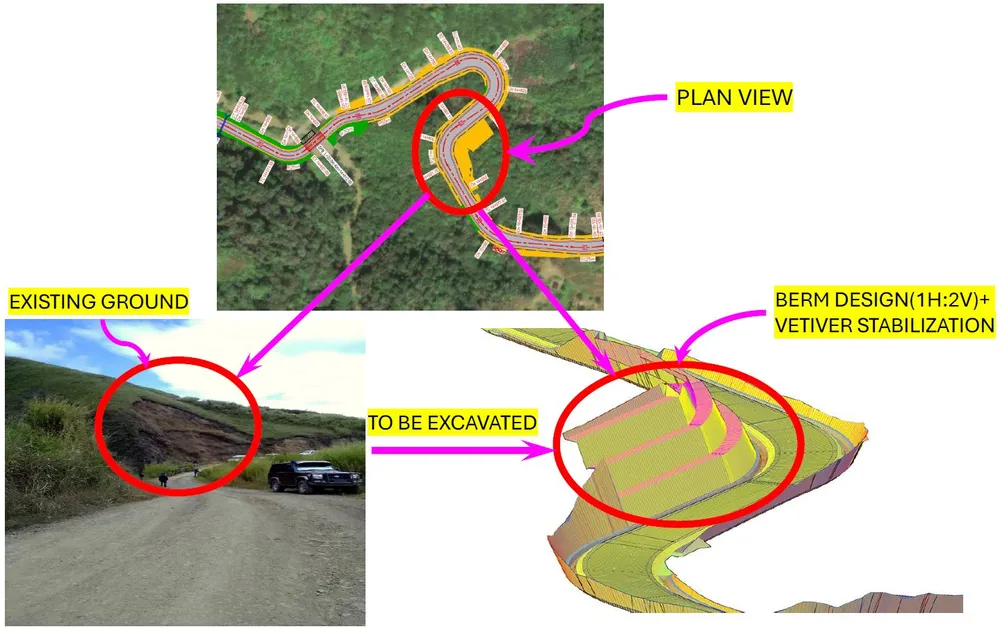
In the latest project, we had the opportunity to contribute to the detailed design of rural roads in Papua New Guinea 🇵🇬
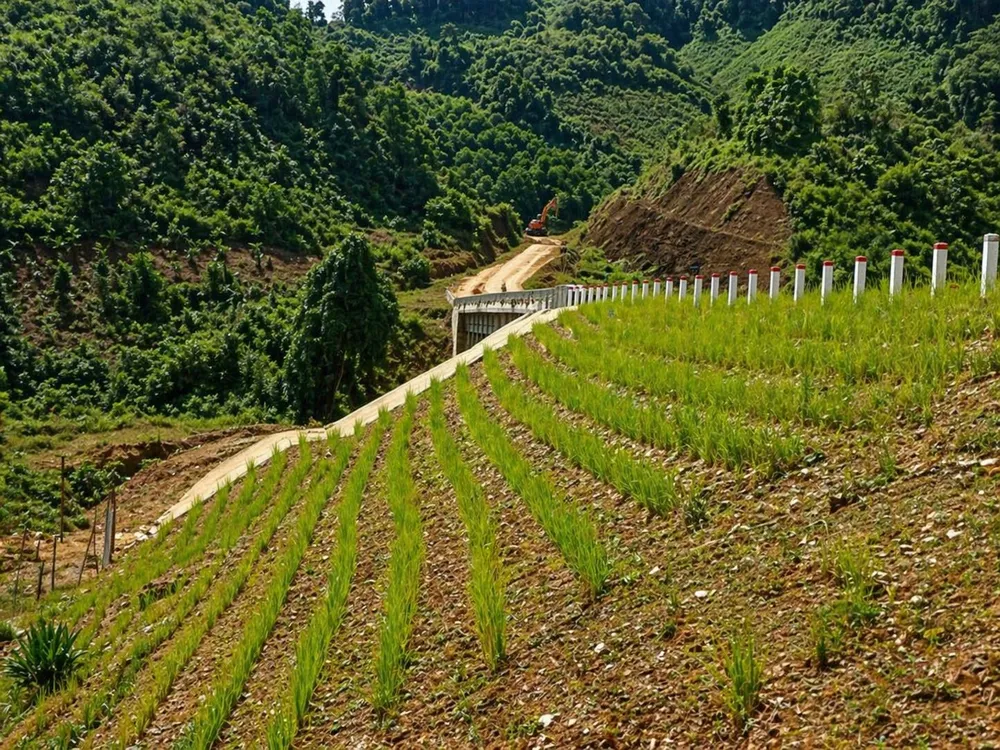
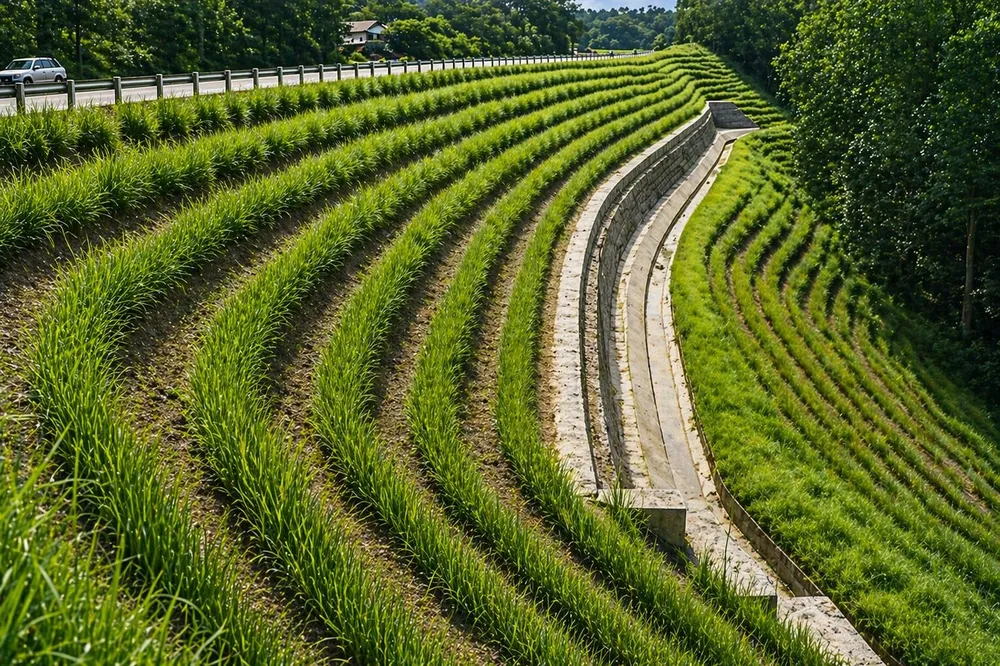
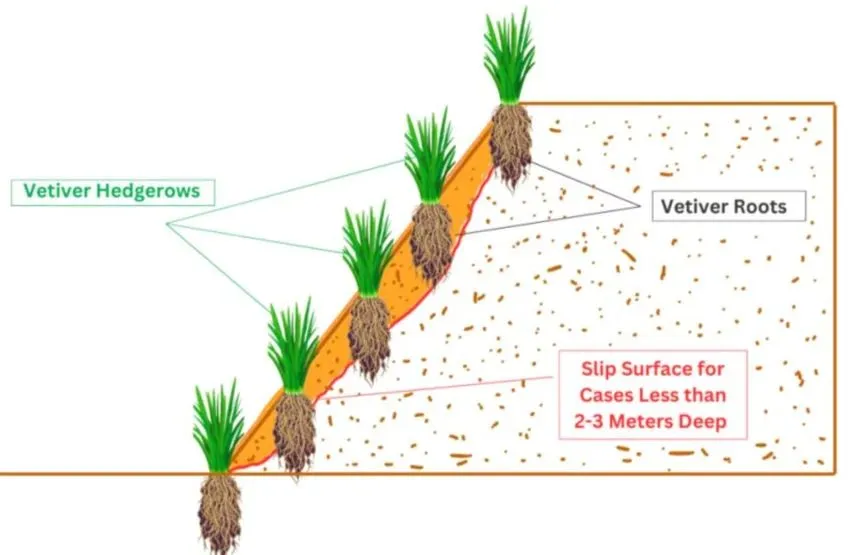
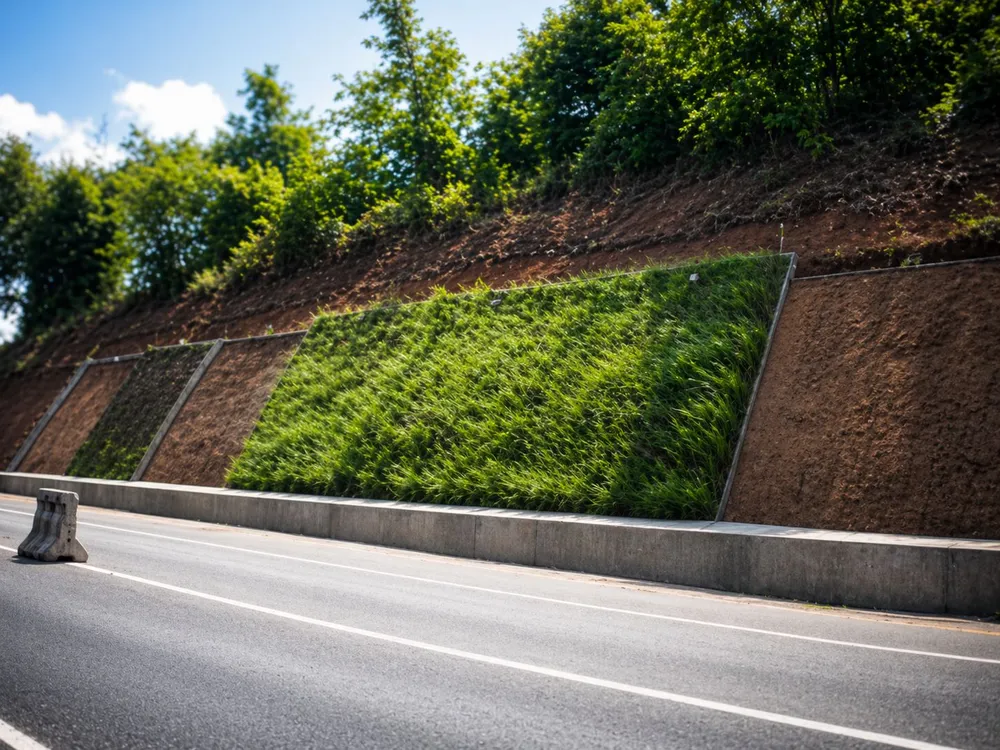
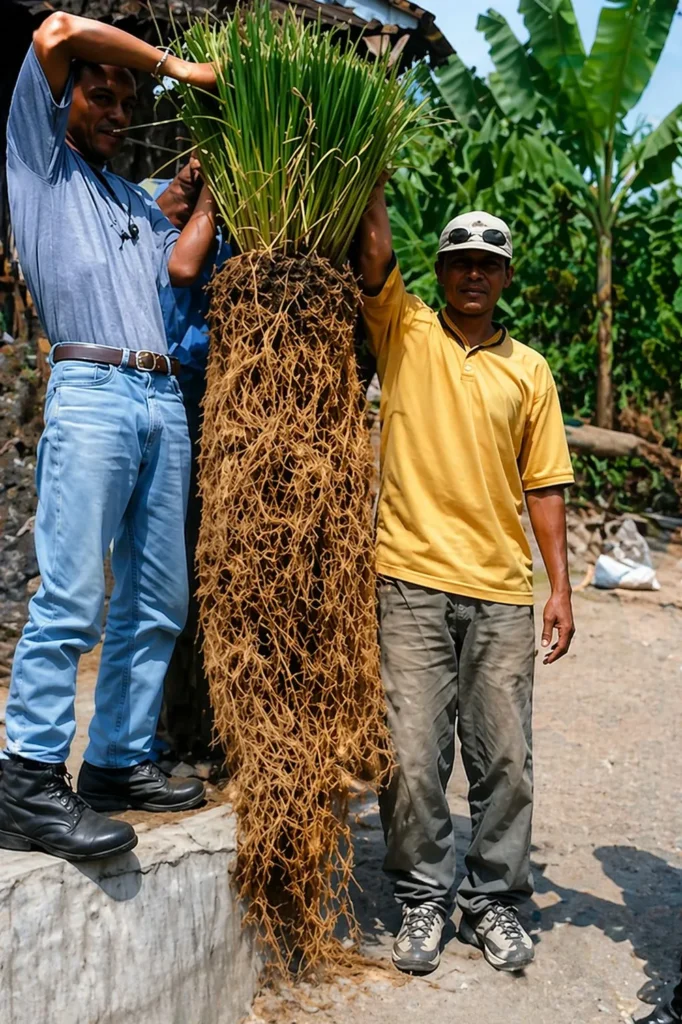
A key experience we gained during this project is the application of a bio-engineering approach using vetiver grass (Chrysopogon Zizanioides) to stabilize both cut (excavation) and fill (backfill) batters.
🔍 𝗪𝗵𝘆 𝘁𝗵𝗶𝘀 𝗮𝗽𝗽𝗿𝗼𝗮𝗰𝗵?
Instead of relying solely on conventional engineering solutions such as retaining walls, concrete lining, and similar expensive systems, this method leverages natural vegetation to improve slope stability while aligning with environmental requirements.
⚙️ 𝗞𝗲𝘆 𝗮𝗱𝘃𝗮𝗻𝘁𝗮𝗴𝗲𝘀:
● Establishment: 2–4 months
● Root depth: up to 3–4 m
● Slope suitability: up to 1H:1V – 1H:2V
● Erosion reduction: 70–90% in high rainfall areas
● Highly resilient to harsh soils, steep terrain, and heavy rainfall
🌿 By integrating natural systems into engineering design, we can achieve solutions that are not only effective but also environmentally responsible.
This experience reinforced the value of combining traditional engineering with Bio-Engineering techniques, particularly in regions with challenging terrain and high rainfall.